
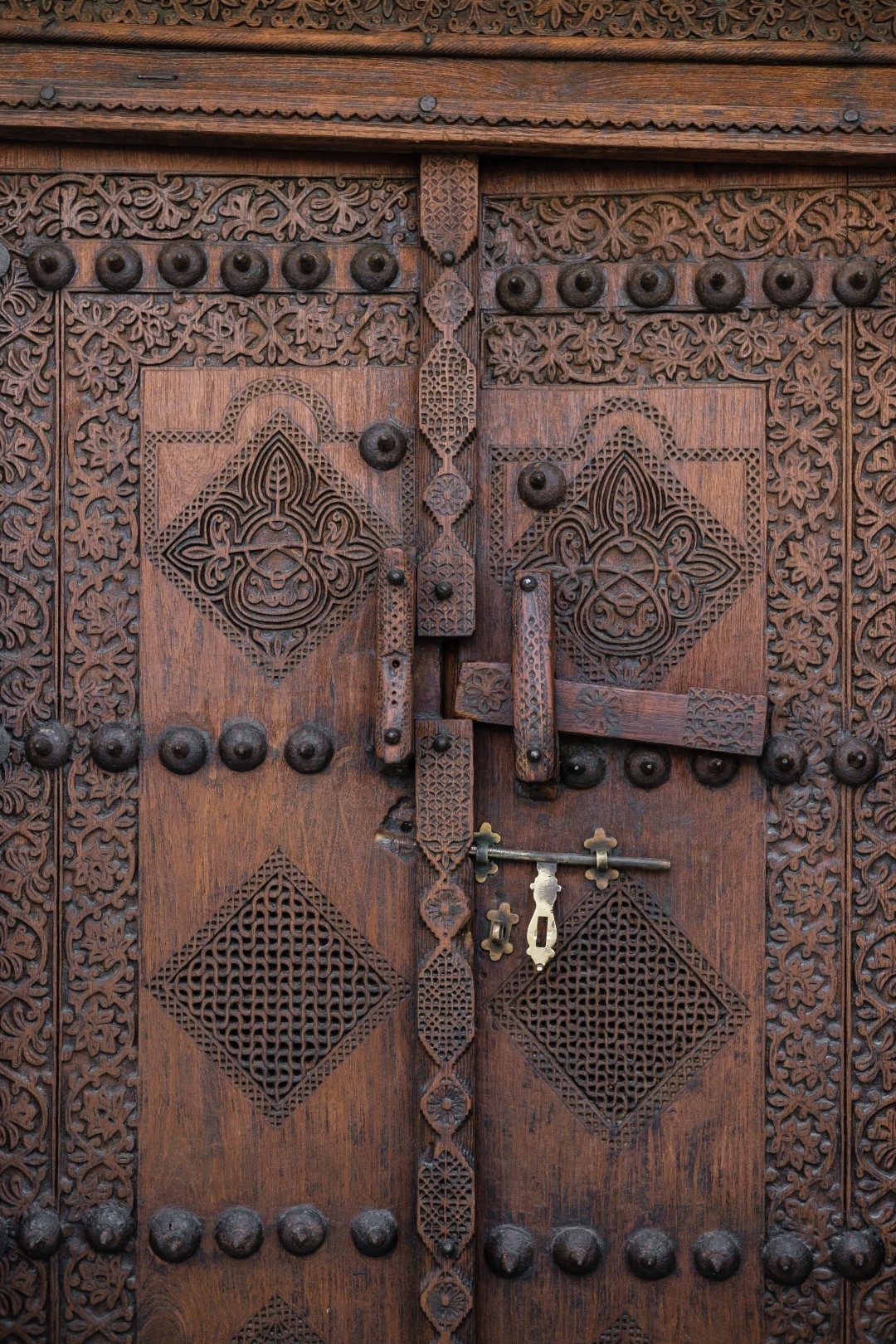
Figur 1 : Abdullah Al Zayed House for Bahraini Press Heritage
Abstract —
Just as a book is judged by its cover, a house is often judged by its door. An essential architectural element of the dwelling, the door serves not only as an entrance but also as protection against external and natural elements. Therefore, durability and longevity were key consideration in its construction. Wood, a material familiar to the surrounding environment, was commonly chosen for its availability, strength, and adaptability.
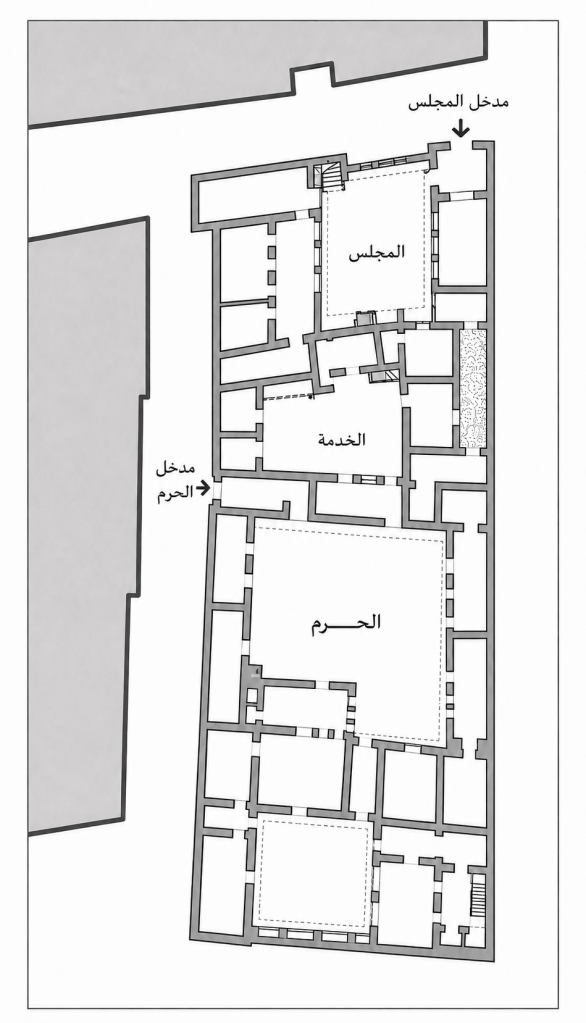
Figure 2 : Isa Bin Ali House
Introduction —
The main door traditionally served as the primary entrance to the dwelling, unless an additional side entrance was incorporated into the house design. In many traditional homes, the principal entrance was commonly used by men of the household and led directly to the majlis or the main reception space, where guests were welcomed, and social gatherings took place. The secondary side entrance, on the other hand, was generally reserved for the women of the household, providing access to the more private areas of the residence and was often strategically positioned near the kitchen or storage spaces. (Figure 2)
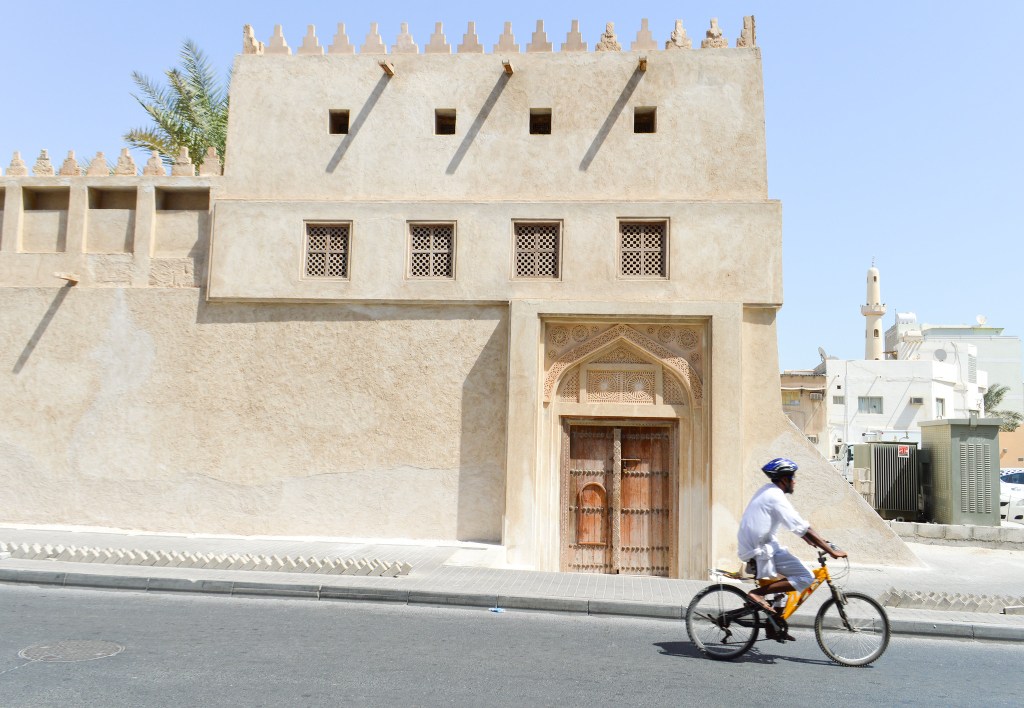
Figure 3 : Shaikh Isa Bin Ali House
The scale of the entrance door often reflected the size and status of the house. However, larger doors also increased visual exposure to the interior, potentially compromising the privacy which is highly valued within traditional architecture. To address this issue, a smaller access door was integrated into one of the leaves of the main entrance door, which was typically a double-leaf configuration. This smaller embedded door, usually located within the left leaf, that was known by two names locally: “Khokha – خوخة or Farkha – فرخة ”. (Figure 3)
The monumental entrance doors themselves were commonly referred to as “Derwazah” (darvāze/ دروازه), a term of a Farsi origin, reflecting the historical linguistic and cultural exchanges within the Gulf region. Such doors were generally associated with larger architectural structures, including fortified compounds and substantial residences, emphasising status, protection and architectural significance.
Historical Background —
The principal material used in the manufacture of the traditional doors was teak wood, valued for its durability and resistance to the harsh climatic conditions of both summer and winter. Owing to the density and hardness of the material, decorative treatments were generally limited. Ornamentation was typically confined to iron elements, such as the latches and hinges where applicable, as well as rows of nails arranged horizontally across each leaf of the door. Over time, particularly in the case of the main entrance doors, their architectural character evolved under the influence of Indian craftsmanship and aesthetics, largely as a result of the long-established trade connections across the Gulf region.*1
Prior to 1901, traditional wooden doors were generally simple in design, primarily serving functional and protective purposes. By the late 1940s, however, door designs became increasingly decorative, incorporating ornamental features such as the central vertical element positioned between the two door leaves, commonly referred to as the “nosing”. This decorative treatment became widely adopted among ordinary residential dwellings, whereas the more monumental “Derwazah” doors remained characteristic of larger and more prestigious residences.*2
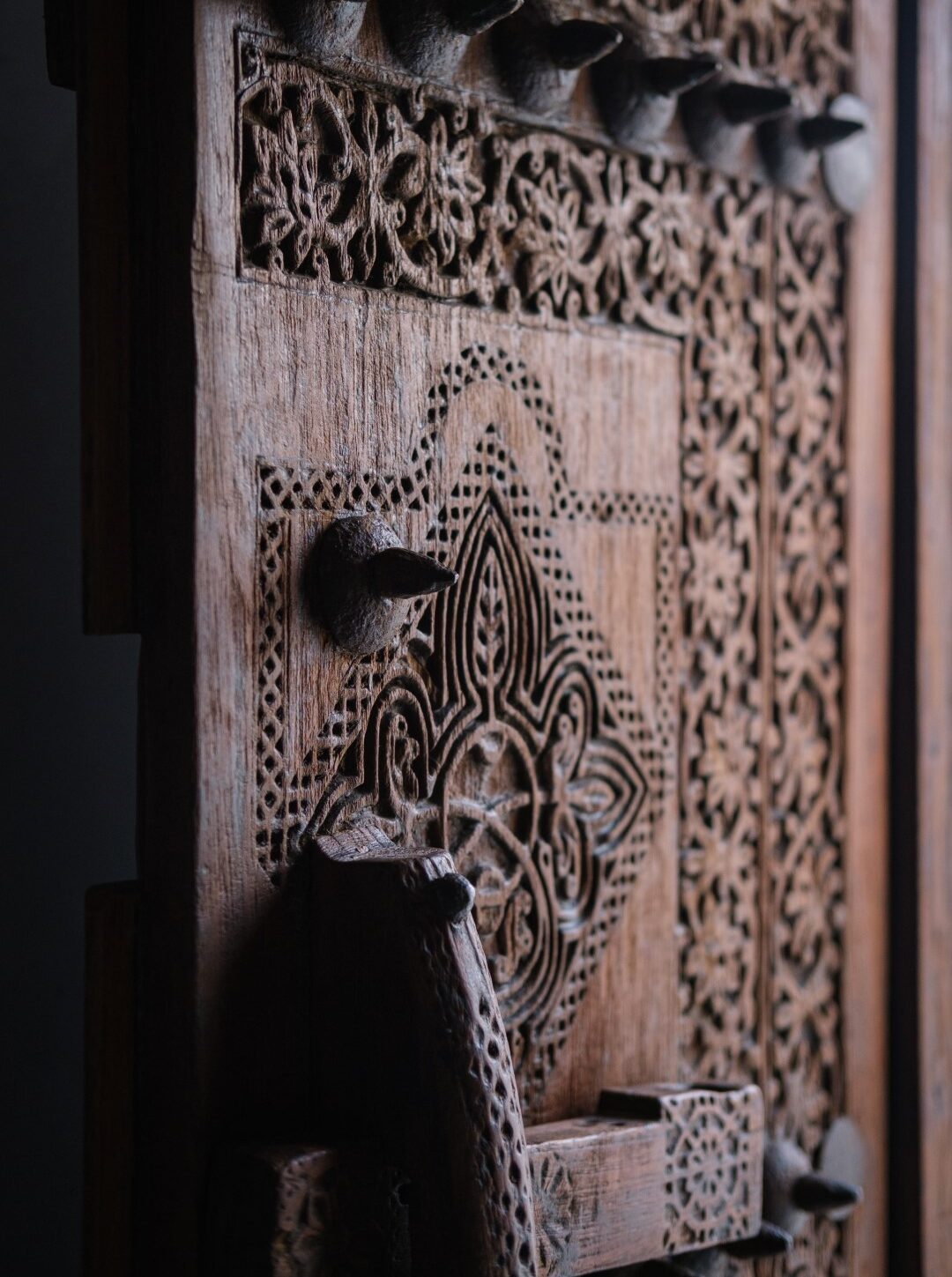
Figure 4 : Abdullah Al Zayed House for Bahraini Press Heritage
Contemporary Interpretation —
In contemporary architectural practice, there has been a growing preference for minimal and modern design approaches, reflecting a gradual transition away from the classical styles that were prevalent during the late 200s and 2010s, based on my observation. In response to the changes in aesthetic preferences, manufacturers have increasingly incorporated traditional motifs into contemporary entrance doors designs through the use of modern materials such as aluminium, steel, and iron. Despite these efforts, such applications often appear thematic or decorative rather than being fully integrated into the everyday architectural identity, resulting in designs that seem visually disconnected from the overall character of the residence.
Therefore, it is recommended that traditional door designs be reinterpreted through a contemporary minimalist approach that preserves their distinctive patterns and architectural characteristics while adapting them to modern materials and construction techniques. Such an approach would allow traditional heritage elements to coexist harmoniously with the overall aesthetic language of contemporary residential architecture.
Conclusion —
In conclusion, traditional Bahraini doors represent an important architectural and cultural element that reflects the social identity, craftsmanship, and historical influences of the region. Although contemporary architectural trends increasingly favour minimal and modern aesthetics, the reinterpretation of traditional door characteristics through modern materials and simplified forms offers an opportunity to preserve this heritage within present-day residential design. By balancing authenticity with contemporary functionality, traditional architectural elements can continue to contribute to the visual and cultural identity of Bahraini architecture.
References —
Figure 1 : Shaikh Ebrahim Centre – Abdullah Al Zayed House for Bahraini Press Heritage 16 May 2026
Figure 2 : لطائف العمران في دراسة المكان – المحرق، طارق والي، مطبعة بانوراما الخليج، الطبعة الأولى ،1990.ص103
Figure 3 : Photo by Francisco Anzola – Flickr – https://flic.kr/p/MPdgCZ 18 May 2026
Figure 4 : Shaikh Ebrahim Centre – Abdullah Al Zayed House for Bahraini Press Heritage 16 May 2026
*1 : Muharraq, Urbanism of a Gulf City – Tarek Waly Pg:141
*2 ALFANREMAGAZINE. Aug 26, 2020. صناعة الأبواب التراثية البحرينية [Video]. YouTube. https://youtu.be/J1iOT7gRHb0?si=jcOR5NmdpqR5BXjC
 NF Studio
Leave a comment